transubstantiation n. [from Medieval Latin transubstantiatio, derived from transubstantiare]
In Catholic theology, the total conversion of the substance of the bread and wine into the substance of the body and blood of Christ, brought about by divine omnipotence during the consecration in the Mass.
gesture matter and symbol
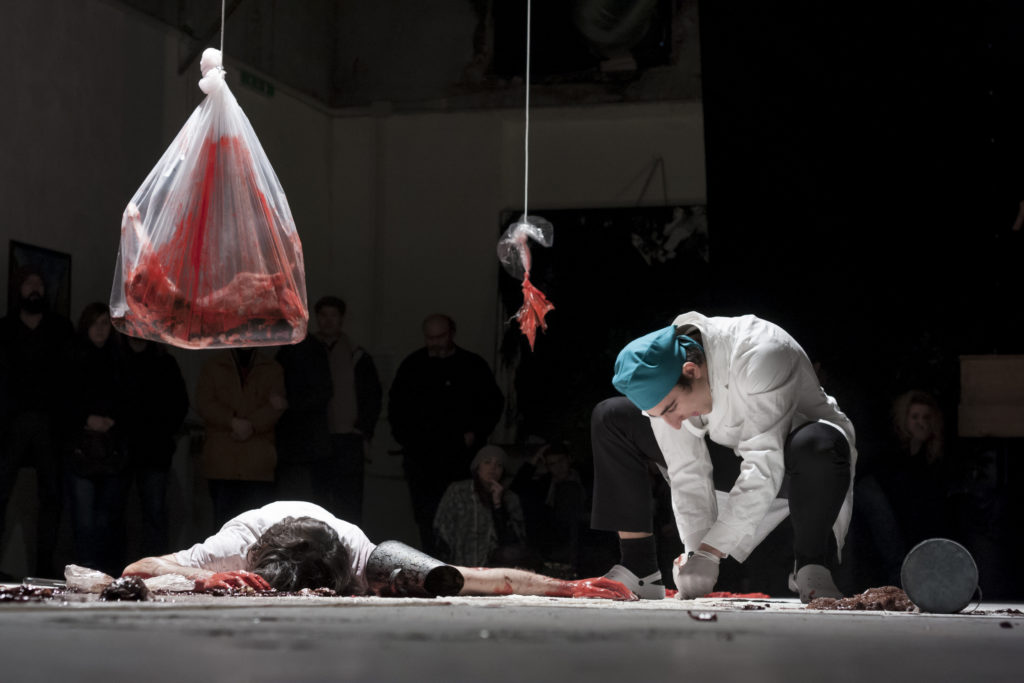
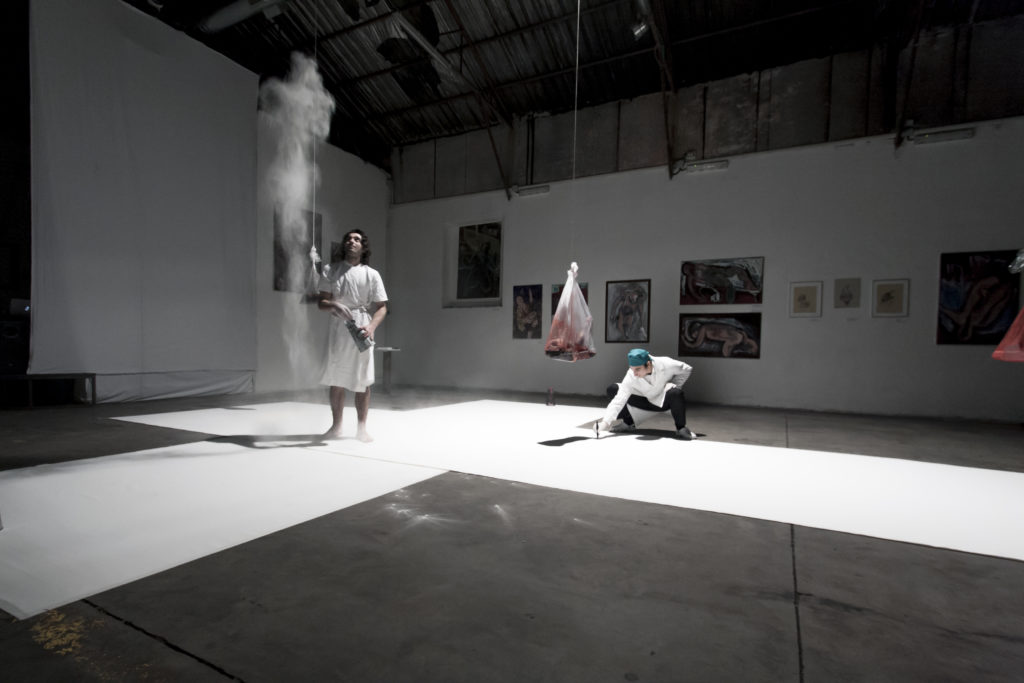
Atelier Montez, Rome, 16.01.2014 — Within the exhibition “The Sign of Flesh” by Diego Nocella curated by Prof. Robertomaria Siena at Atelier Montez, Gio Montez presented Action No. 4, titled Transubstantiation: an improvised pictorial performance that unites gesture, matter, and symbol into a single immersive experience. The proposition emerges as a conceptual counterpoint to Nocella’s pictorial research, entering into dialogue with it through a radical selection of materials and a scenographic construction with a strong ritual value.
painting as a physical and sacred act
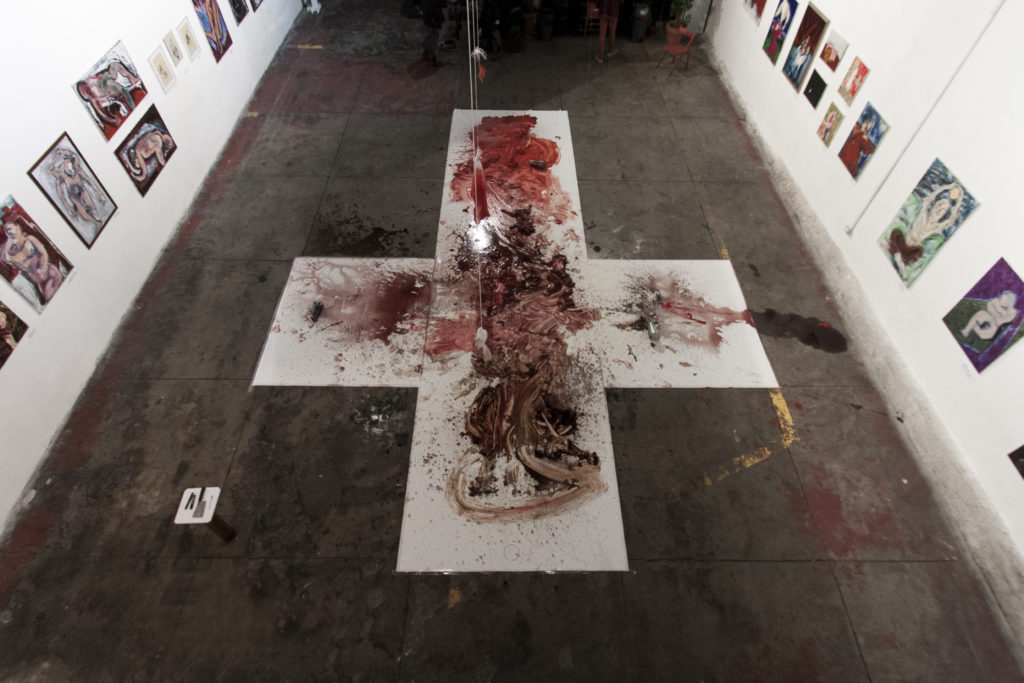
At the center of the performance lies a vast 24-square-meter canvas spread across the floor, configured as a large open cube, thus becoming a cross unfolded on the ground. Upon this surface, Gio Montez acted using organic and symbolic materials — ink, blood, lamb meat, flour, wine, water — transforming painting into a physical and sacred act, a process through which matter settles and immediately becomes language. The pictorial gesture becomes a trace, an imprint, an anthropometry: a constellation of signs in which matter does not merely illustrate, but speaks, manifests itself, transforms.
the sacrificial lamb
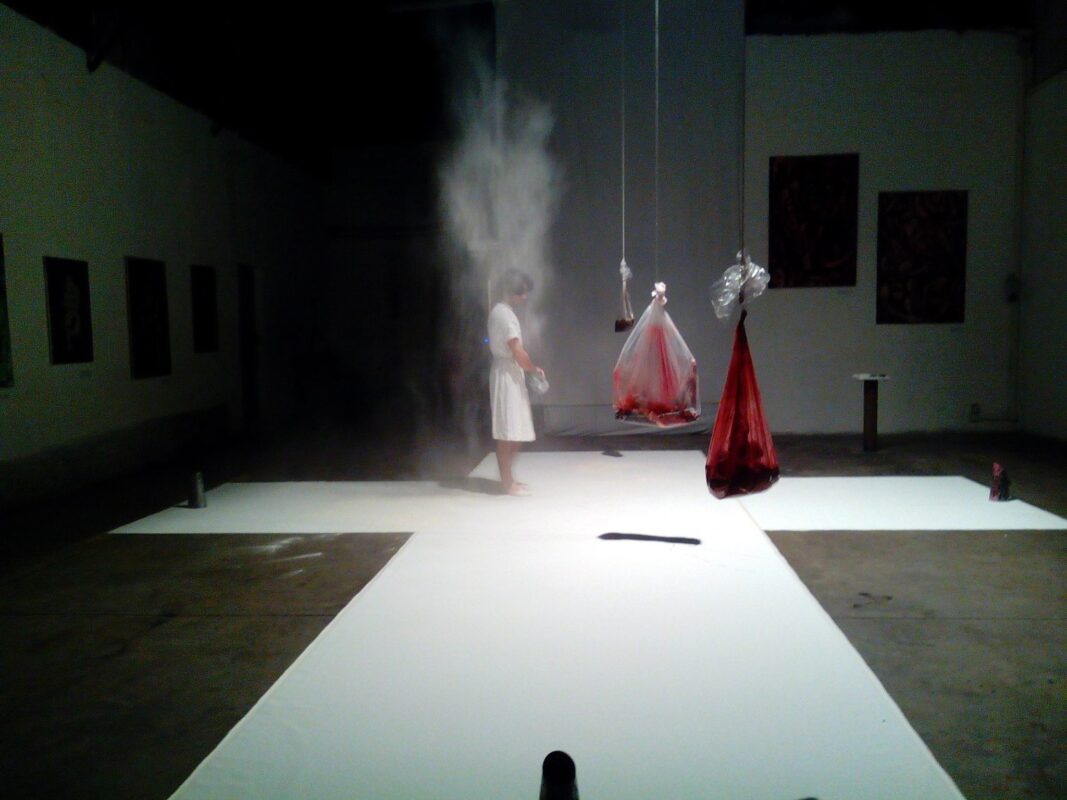
The scenic apparatus explicitly evokes the Christian theme of transubstantiation: wine becoming blood, the host becoming flesh. The presence of the hanging lamb clearly recalls the archetype of the sacrificial lamb, while the flour alludes to Christ’s body and the wine to his blood. These elements do not function as simple iconographic references; rather, they operate as semantic vectors capable of transforming pictorial matter from a merely physical substance into a symbol, making visible the passage from sign to meaning, from gesture to rite.
the theatre of matter
Essential to the success of the action was the collaboration of Carlo Giordano, evocatively dressed as a surgeon or butcher, a liminal figure acting at the edges of the canvas. His gestures, performed outside the pictorial field and amplified by his attire, underscored the relationship between context and interpretation, revealing how every sign, even the most informal, acquires meaning through the situated perception of the viewer. His presence transformed the pictorial action into a kind of theatre of matter, heightening the almost liturgical character of Montez’s intervention.
dynamics of trans-substantiation
The six large canvases produced during the performance are therefore not mere remnants or relicts of the action, but the results of a process in which gesture and interpretation, matter and symbol, creation and reading reflect one another. Each surface carries within it the dynamics of trans-substantiation: the passage from formless matter to a further conceptual dimension, activated by the rituality of the scene and by the mental framework of its viewers.
the field of revelation
With Transubstantiation, Gio Montez does more than paint: he constructs an experiential device in which painting becomes body, narration, and secular sacrament. An action that places at its core the transformative power of matter and the interpretative responsibility of the gaze, turning the canvas into not merely a site of representation, but a field of revelation.
Azione n°4 – TRANSUSTANZIAZIONE
16/12/2014, Atelier Montez, Roma
Director: Gio Montez
Actors: Gio Montez, Carlo Giordano
Video: Alessandro Di Fraia
Scenografia: IL SEGNO DELLA CARNE di Diego Nocella