Category Archives: Manifeste Azioni
Dec
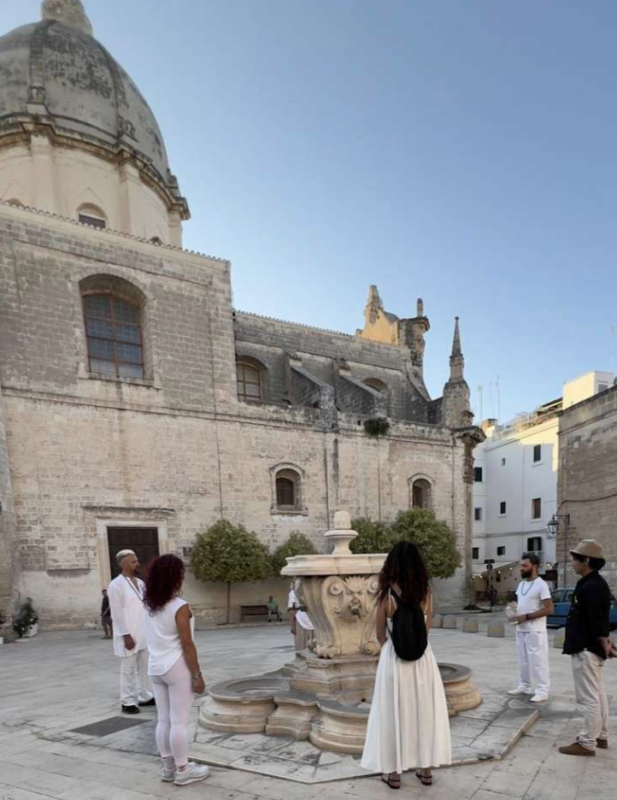
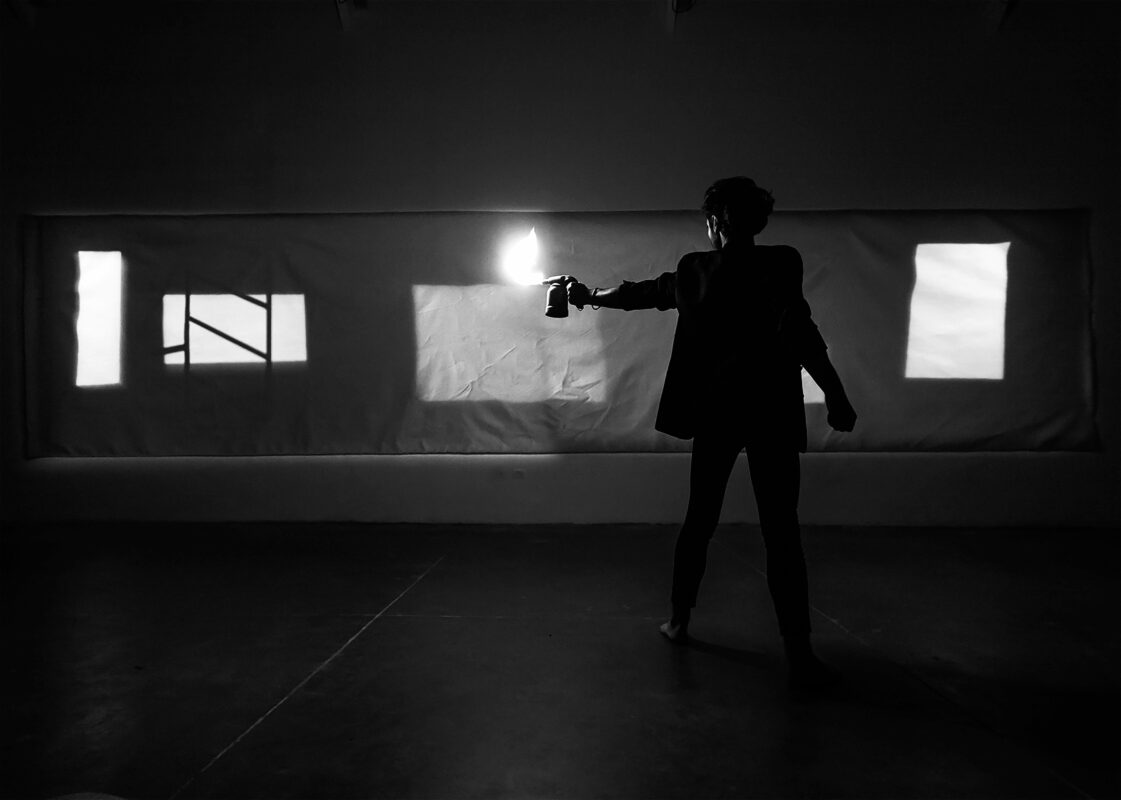
Gio Montez presents the performative collective Barbari Sognanti, led by Vitaldo Conte. Positioned between ritual, performance, and documentation, the action transformed a dense, ecstatic performative environment into a field of visual and conceptual experimentation.
Through a dynamic scenic direction and an experimental audiovisual practice—centered on the inhabitable installation known as “the cage”—Montez explored the threshold between self and other, documentation and creation. Video and photography became imaginal devices, deforming reality to generate poetic content. The resulting works—a video and six unique photographs—render the performative bodies as an immaterial presence, a “cloud of smoke enclosed in a cage,” existing only through its relational context.
Jul
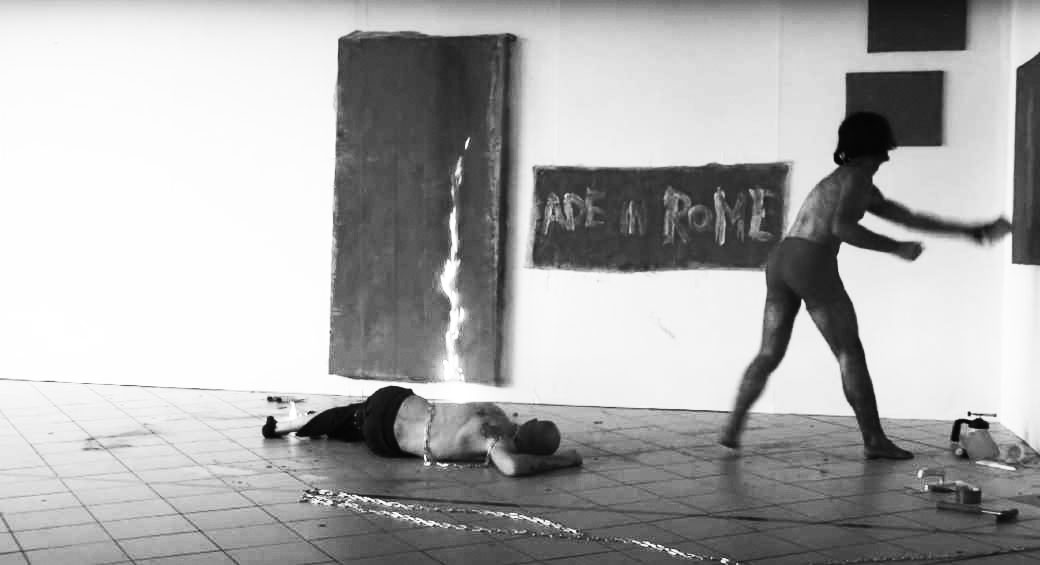
Gio Montez replaces the idea of the finished artwork with a fluid action, creating a system of exchange, where form remains negotiable and value is determined in real time. The canvas becomes a mutable field, fragmented, pre-sold, and completed only through a pact between artist and collector. In this process, painting is no longer a static object but a liquid instrument—one that absorbs urgency, participation, and risk—transforming survival into method and transaction into gesture.

Dec
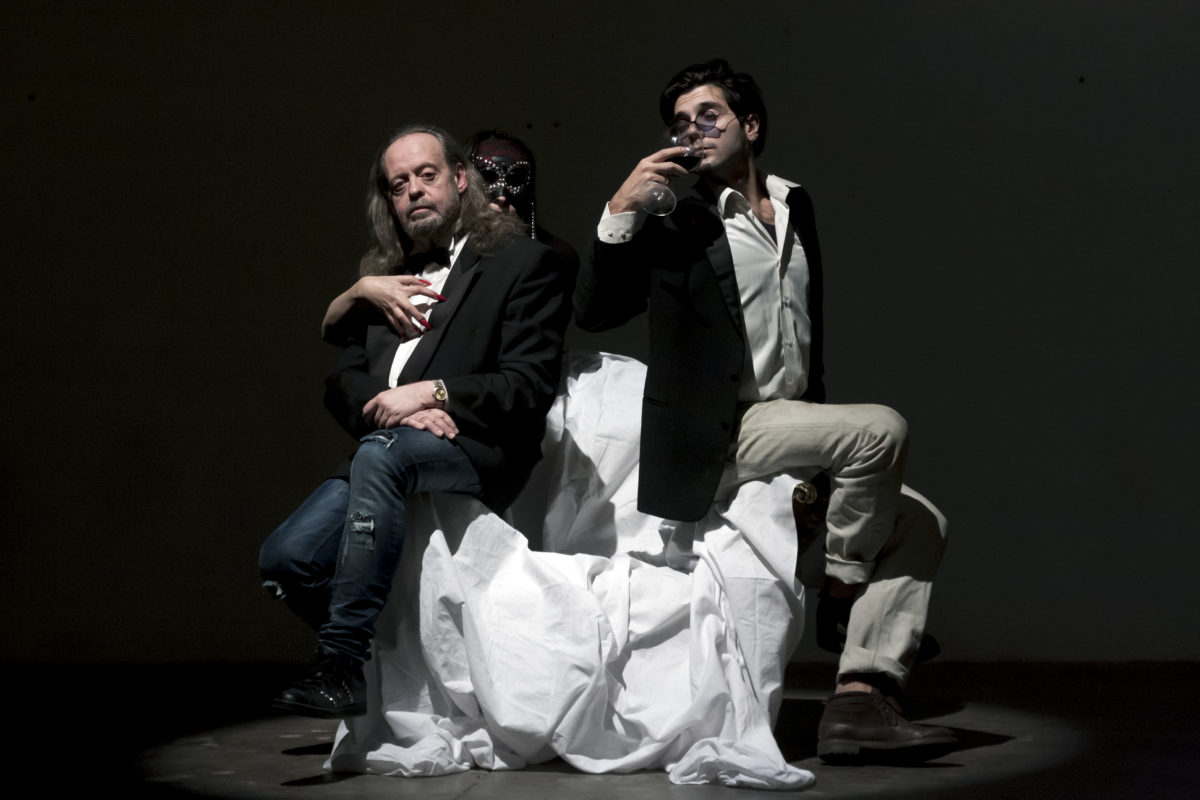
Evacuazione emerges from an urban emergency, transforming accumulation, neglect, and abandonment into an act of removal and regeneration. The action displaces waste from the streets into the symbolic economy of art, where discarded materials are reconfigured as provisional objects rather than definitive works. Value is shifted away from the artifact toward the gesture itself: the physical act of clearing space, restoring attention, and reactivating collective responsibility. In Evacuazione, art functions as a temporary tool, an operative process that privileges care over possession and demonstrates how minimal, shared actions can recalibrate the relationship between bodies, materials, and public space.
Nov
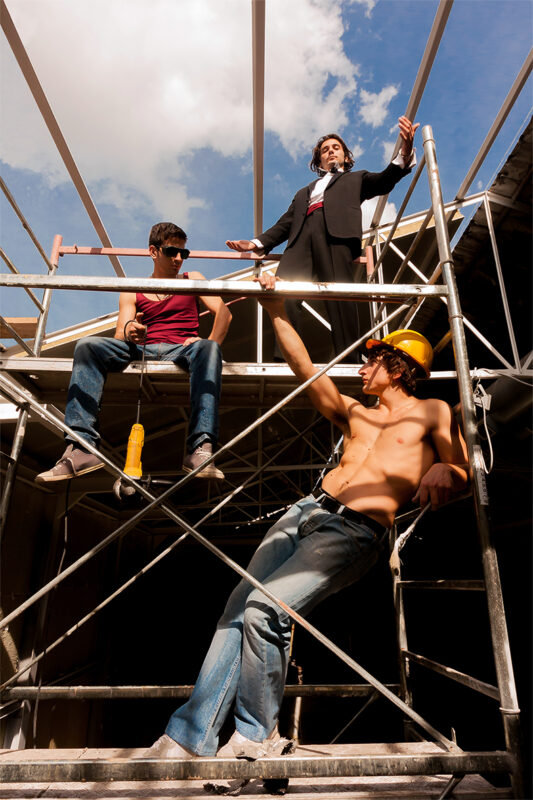
Between 2010 and 2015, in Rome, Gio Montez transformed a fire-damaged industrial ruin into Atelier Montez, conceiving restoration not as renovation but as a methodological and artistic act. By “making solid again” what had been destroyed, Montez recognized the architecture itself as a work of art—both container and content—capable of carrying aesthetic, historical, and social meaning forward in time.
Restoration stands as a gesture of material and symbolic regeneration, in which urban recovery becomes a position on the present: a reflection on authority, continuity, and cultural responsibility within a fragile political landscape. The rebuilt space functions as a living monument of contemporaneity, devoted to artistic production, transmission, and collective memory.
Mar
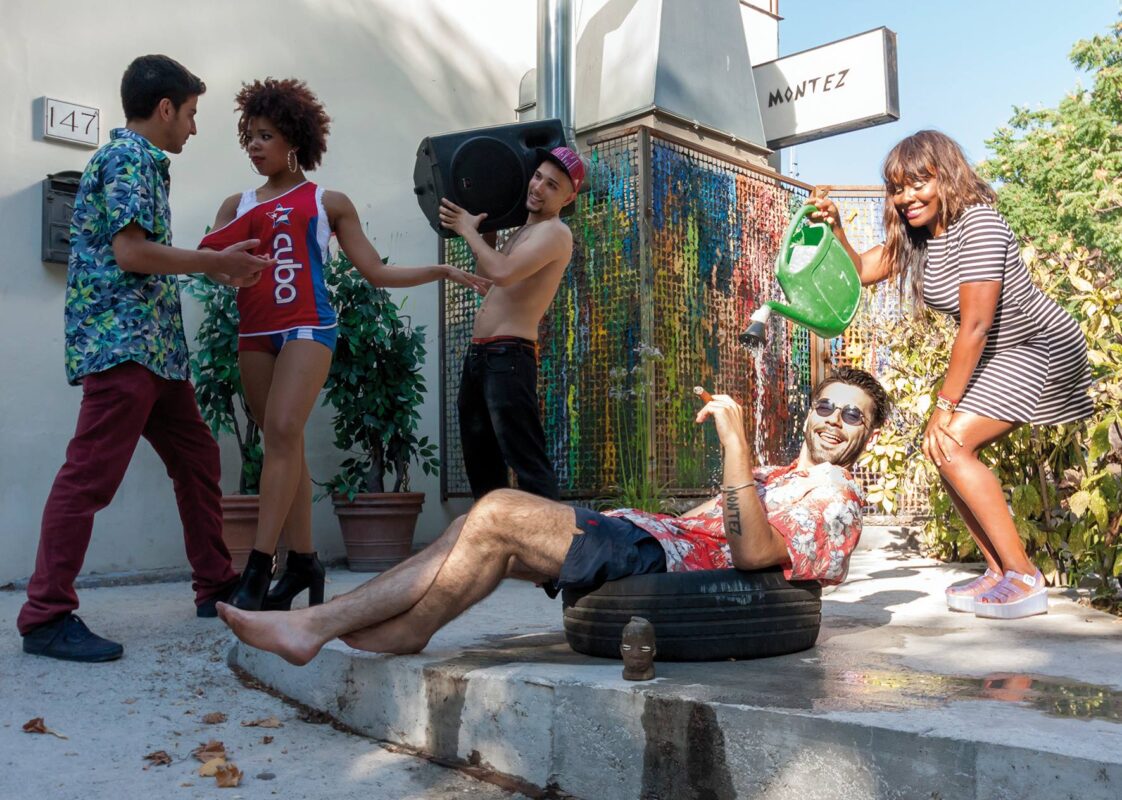
Gio Montez’s action witnesses a symbolic passage in Cuban history, coinciding with the lifting of the long-standing embargo that had imposed political, economic, and cultural isolation for more than six decades. Conceived as a conceptual and material gesture, the action reflects on Cuba’s transition from enforced stasis toward an uncertain engagement with the global system. At its core is Black Cloud, a ready-made installation in which Montez captured carbon dioxide emitted by a 1930s automobile still circulating in Havana, sealing it within a glass jar and transporting it to Europe as an archaeological relic of a suspended era. Through this and related works from the Incubation cycle, Montez adopts a neo-Dadaist approach that positions art as a tool of preservation and critical memory, capable of transforming ephemeral traces of history into reflective instruments for understanding a society in transition.
Dec
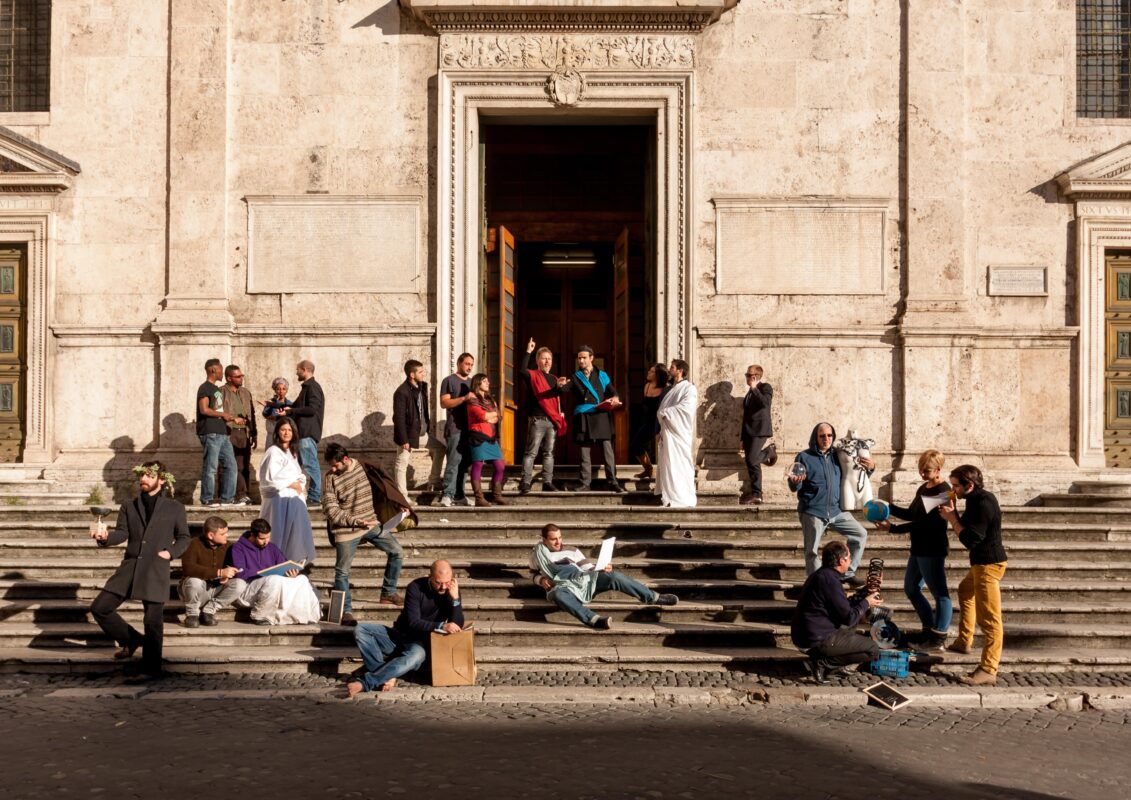
Gio Montez transforms Piazza del Popolo into a living tableau, gathering the artists of Rome in an unannounced, self-generating happening. What emerges is The School of Rome, a photographic re-writing of Raphael’s School of Athens, composed not through staging but through presence, relation, and revelation.
May
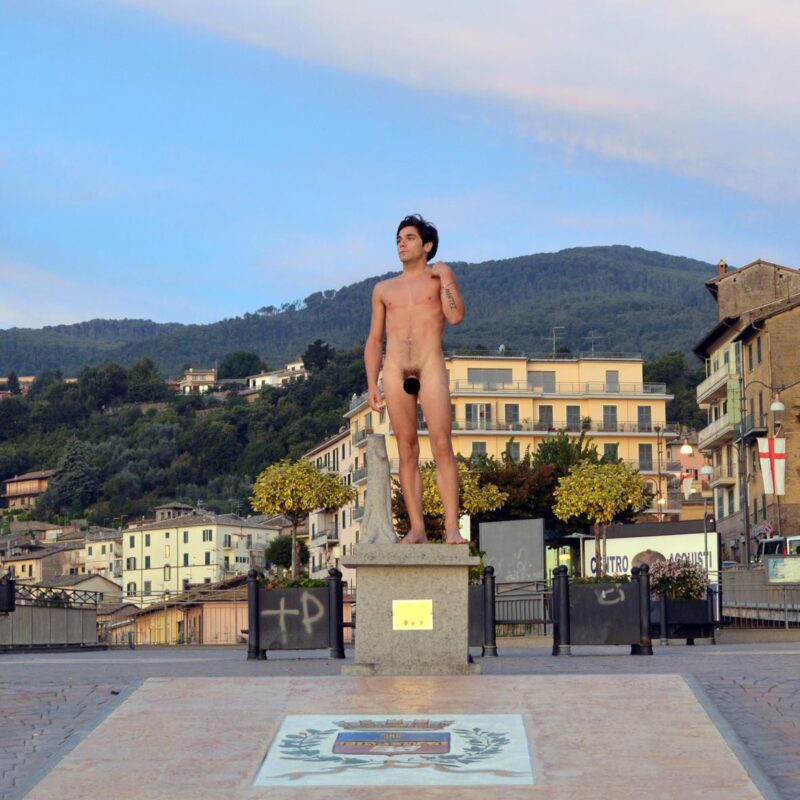
When a Sculpture Becomes a Gesture. There are moments in contemporary art when the boundary between object and action becomes so thin it suddenly dissolves. Gio Montez’s Azione n. 6 – Sublimazione is one of those moments—an event that is less a performance than an eruption of meaning in a precise place and time.
It begins with a block of local peperino stone, intended to become a sculpture. Instead of carving a figure, Montez removes the figure itself, leaving only a pedestal inspired by Michelangelo’s David. And then, in a gesture both vulnerable and defiant, the artist steps onto that pedestal—nude, exposed to the Tuscia landscape and to the centuries of history embedded in it.
Facing the valley of Bomarzo, Montez reenacts the tension of a mythic hero confronting his monsters. The gesture sparked debate, fascination, and, eventually, recognition: what some saw as provocation was soon understood as a clear act of sublimation—the transformation of instinct into symbol, flesh into thought, scandal into art.
In that instant, the pedestal becomes a stage, the body becomes language, and the entire landscape becomes the artwork’s frame. Montez’s “Sublimazione” is not just a performance; it is a meditation on courage, vulnerability, and the power of turning human impulse into creative revelation.
Apr
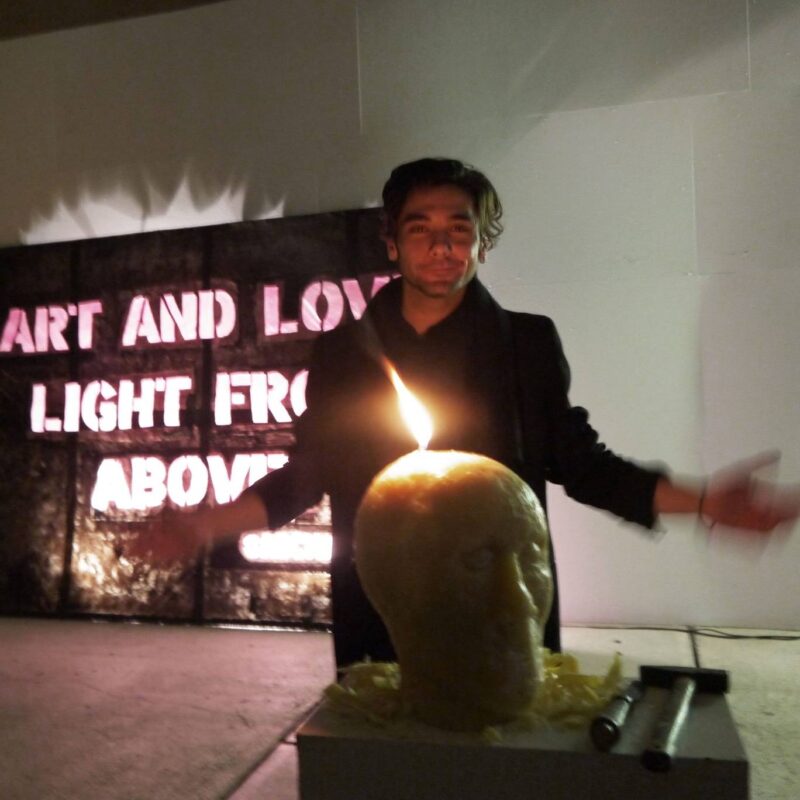
Gio Montez sculpted a monumental candle from 60 kilograms of beeswax for the biennial of light culture, allowing fire and hand to shape it together. The work emphasized process over product: visitors witnessed the candle’s gradual transformation while the artist remained on site, carving as it slowly burned.
Revisited in later editions of the biennial, the piece remains unfinished, a meditation on time, materiality, and the interplay between human action and elemental forces, highlighting Montez’s focus on art as an evolving, lived experience.
- 1
- 2