Author Archives: Valz
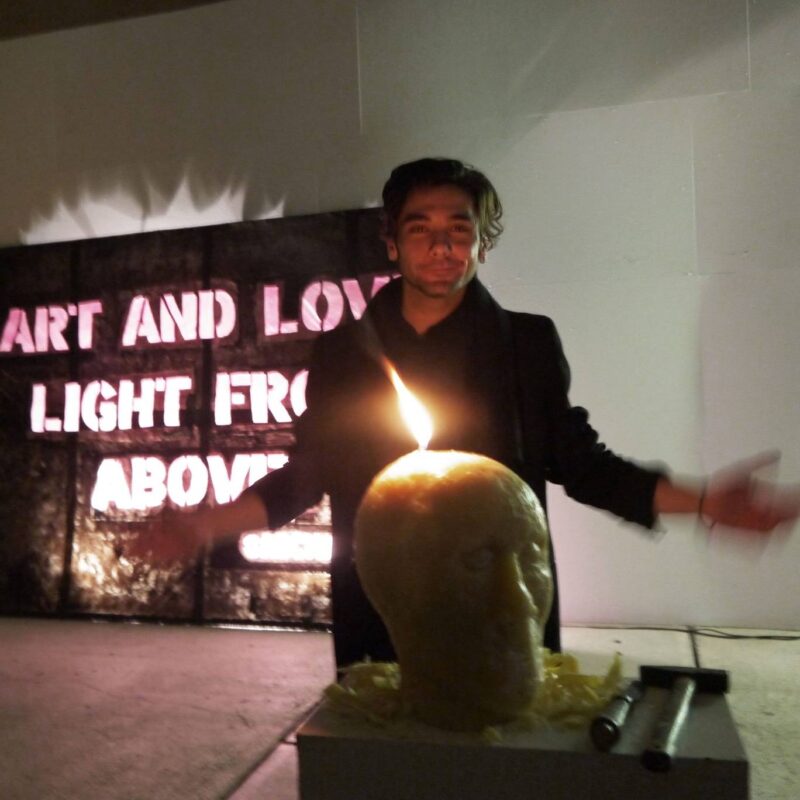
Gio Montez receives the Premio Soriano Città for his powerful contribution to public art in Soriano nel Cimino. With the sculpture “Sublimazione,” a contemporary pedestal inspired by Michelangelo’s David, Montez invites citizens to reclaim the symbolic role of the hero, offering a living monument that challenges the monstrous and celebrates human dignity.
When a Sculpture Becomes a Gesture. There are moments in contemporary art when the boundary between object and action becomes so thin it suddenly dissolves. Gio Montez’s Azione n. 6 – Sublimazione is one of those moments—an event that is less a performance than an eruption of meaning in a precise place and time.
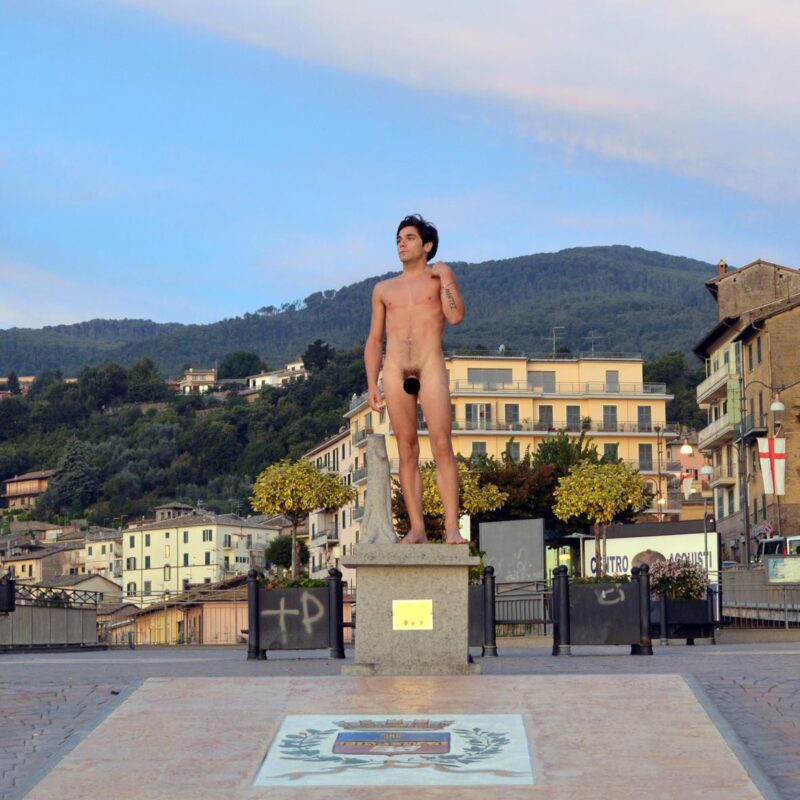
It begins with a block of local peperino stone, intended to become a sculpture. Instead of carving a figure, Montez removes the figure itself, leaving only a pedestal inspired by Michelangelo’s David. And then, in a gesture both vulnerable and defiant, the artist steps onto that pedestal—nude, exposed to the Tuscia landscape and to the centuries of history embedded in it.
Facing the valley of Bomarzo, Montez reenacts the tension of a mythic hero confronting his monsters. The gesture sparked debate, fascination, and, eventually, recognition: what some saw as provocation was soon understood as a clear act of sublimation—the transformation of instinct into symbol, flesh into thought, scandal into art.
In that instant, the pedestal becomes a stage, the body becomes language, and the entire landscape becomes the artwork’s frame. Montez’s “Sublimazione” is not just a performance; it is a meditation on courage, vulnerability, and the power of turning human impulse into creative revelation.
During the years of the so-called “Arab Springs,” the artist crossed the semi-desert regions of Morocco several times, searching for a visual form capable of reconciling Christian tradition and Arab culture, as well as Italian and Moroccan building practices. The palms—symbols of water and sacredness in the local context—thus take on the appearance of modern, monetizable buildings, becoming metaphors for the cultural and urban tensions affecting the country.
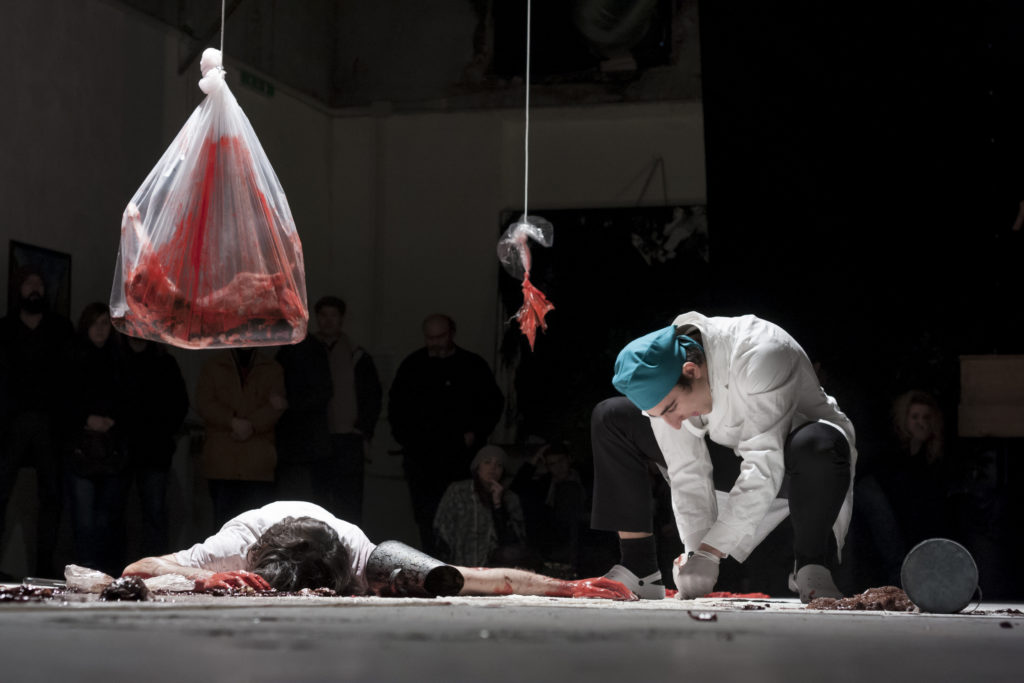
Organic and symbolic materials — ink, blood, lamb meat, flour, wine, water — transforming painting into a physical and sacred act, a process through which matter settles and immediately becomes language. The pictorial gesture becomes a trace, an imprint, an anthropometry: a constellation of signs in which matter does not merely illustrate, but speaks, manifests itself, transforms.
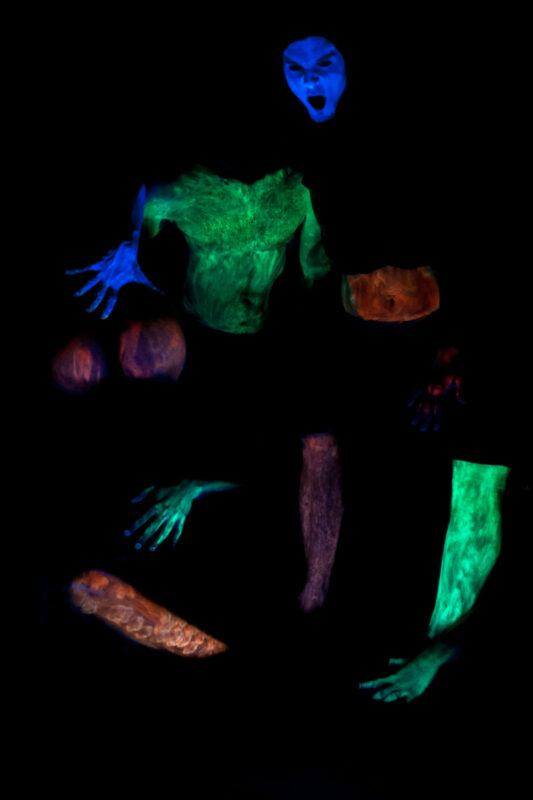
As darkness falls, streetlights go out one by one, leaving a single violet beam to reveal bodies painted in fluorescence. They move as living brushes, pouring light onto canvas and skin. Above them, a white figure hovers—silent, weightless—like a final breath of illumination. In the end, this glowing procession drifts through the ancient streets, an ephemeral ritual stitched from shadow and color.
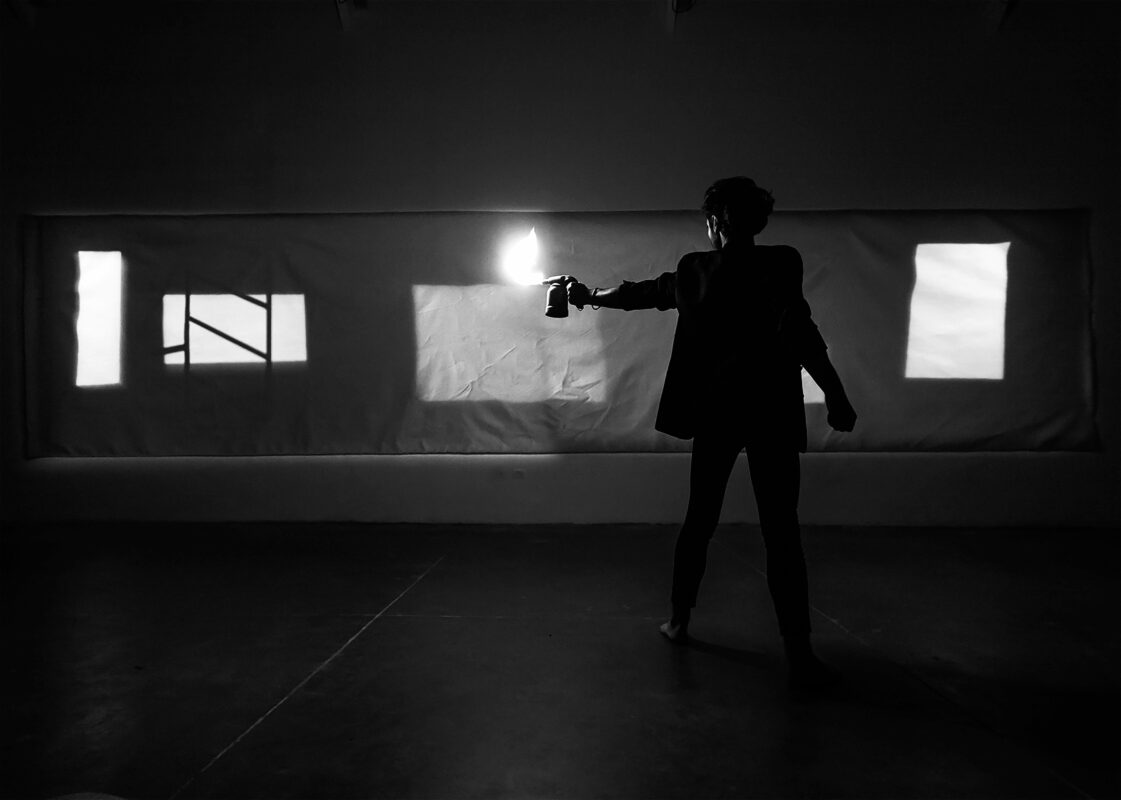
Montez reveals the atelier as a kind of archive of lived experience. He navigates the atelier as a living map, reading and re-reading its corners, its shadows, and its thresholds. This is not merely physical exploration: it is also a relational investigation of how bodies, gestures, and memories linger in a space. Montez does not simply wander—he dialogues: with walls, with objects, with emptiness.
His prospection draws out trajectories of past interactions and potential futures, connecting presence and absence. In doing so, he also foregrounds the atelier’s dual identity as both a container and a performer: a stage and a vessel, a silent witness and an active participant.